
Our Process

Our Process
How a tiny flat in Aberdeen turns retired climbing rope and everyday plastic into gear worth keeping. Pick a material below and take the full tour.
We take trash and give it use and value again.
Forma Designs Collective (FDC, "The Belt Guy"… we answer to a lot of names) is a one-person design studio run out of a tiny flat in Aberdeen, Scotland. It started with an £80 sewing machine, a product design course at RGU, and a job at a climbing wall where I kept watching good rope get binned.
So what do we do? We turn waste into durable, retail-ready products — belts, dog leads, keychains, coasters and more — made by hand, built to last, and designed to look good doing it.
Why? Loads of solid material gets thrown out every year with plenty of life left in it. We'd rather keep it in play. This isn't mass recycling where everything gets shredded and shipped off. It's upcycling — we keep the strength, the character and the story, and build something new from it.

Whatever the material, the recipe stays the same
Collect
Intercept waste materials locally, before they hit the bin.
Sort & prep
Check, clean and get the good stuff ready for a second life.
Design
Work with the material, not against it — keep its strengths.
Make it last
Build durable, retail-ready pieces people actually want to use.
From the wall to your waist
A climbing rope is built to hold a falling human. When it retires from the crag, it still has serious strength and character left — here's exactly how we give it a second life.
Meet the material
Modern climbing ropes are kernmantle — a strong inner core ("kern") of twisted nylon (polyamide) filaments, wrapped in a braided sheath ("mantle") that takes all the abrasion. That build is what makes them strong, stretchy and perfect to work with.
Why does a rope get retired? Not because it's worn out — usually just because time's up.
The 6-step rope tour
Every belt starts life on a climbing wall somewhere in the UK. Here's the journey.
Collect
We work with climbing gyms, walls and outdoor folk across the UK to intercept rope that's being retired. Retired for climbing doesn't mean dead — there's loads of strength and character still in there.
Inspect & sort
Every metre gets checked by hand. We feel for flat spots, core damage and glazing, cut out anything past its best, and sort the good lengths by colour and diameter.
Clean
A proper wash to shift the chalk, grit and the smell of a thousand send attempts. Rope goes in tired and comes out ready.
Design & cut
We measure and cut to length for whatever it's becoming — a belt, a lead, a keychain. Colours get paired up so every piece has its own look. No two are the same.
Build
This is the graft. Stitching on the trusty machine, whipping the ends so nothing frays, and fitting solid hardware — buckles, carabiners, clips. Built to be used, not babied.
Check & finish
A final once-over, tidy the ends, and it's off for a second life — ready to be worn, walked and wrecked all over again.
Where our rope comes from & further reading
The gear we rescue is built by some of the best rope makers on the planet. Here's who makes it — and where to learn more about how it works.
Bottle caps, reborn
Our next material is one of the most recyclable plastics on the planet — and one of the most wasted. Here's how we shred, melt and remake it into bold, one-off pieces. (This range is launching soon.)
Meet the material
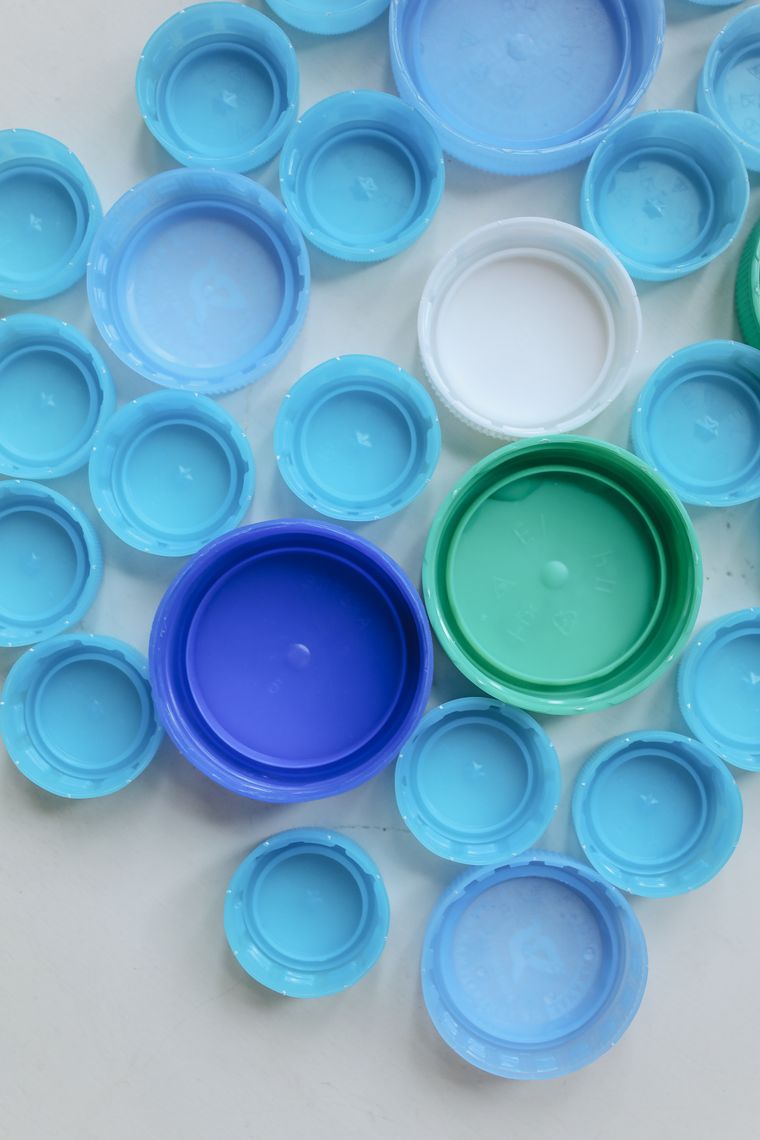
HDPE (high-density polyethylene) is the tough plastic behind milk bottles, bottle caps and tubs. It carries the recycling code ♻ 2, it's food-safe, hard-wearing and melts down beautifully — perfect for remaking.
The catch? Less than a tenth of all the plastic ever made has actually been recycled. The rest is sitting in landfill or the ocean. We'd rather build with it than add to the pile.
The closed loop, at a glance
The 6-step HDPE tour
Same obsession as the rope, a whole new material. Small-batch, in-house, zero-waste.
Collect
We gather HDPE (and its cousin PP) from gyms, cafés and everyday life — bottle caps, milk bottles, tubs and food containers. Stuff that's technically recyclable but too often isn't.
Sort
Split by plastic type and by colour. Colour is the fun bit — it's what gives our terrazzo-speckled pieces their one-of-a-kind marble.
Wash & dry
Everything gets cleaned of labels, glue and food residue. Clean plastic in means a clean melt and a better-looking piece out.
Shred
Clean plastic gets shredded into small, even flakes. Uniform flakes melt evenly — the secret to a solid, consistent finish.
Melt & press
Flakes go into a mould and into the press. Low and slow — gently heated and squeezed under pressure for 30–60 minutes, then cooled under pressure so the sheet sets rock solid.
Finish
Trim, sand and edge into the final piece — trays, coasters, tiles, durable sheet stock for makers, or a bespoke made-to-order design. Precious plastic, made precious again.
The movement behind it & further reading
We're proudly part of a global, open-source recycling community. Here's who's leading it — and where to learn more about the material.
Open-source recycling
Learn about the plastic
Every piece keeps waste in play.
Buy one, and you're funding rope rescues, backing a tiny independent studio, and keeping good material out of landfill. Not bad for a belt.